
Mahjong Scapes®
PARTYPOP PTE. LTD.Board
4.92.73K Reviews
- Version
- 3.3.7
- Installs
- 10.00M
- Age Rating
- Everyone
Screenshots
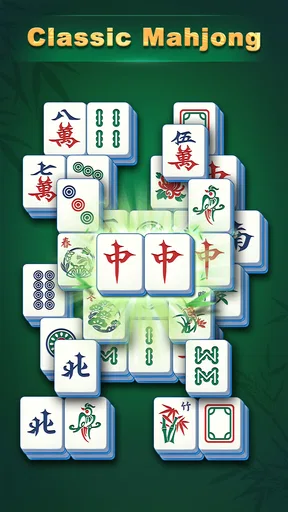
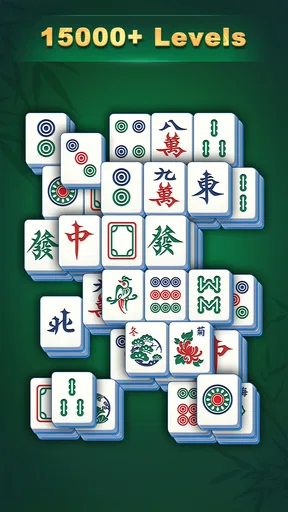
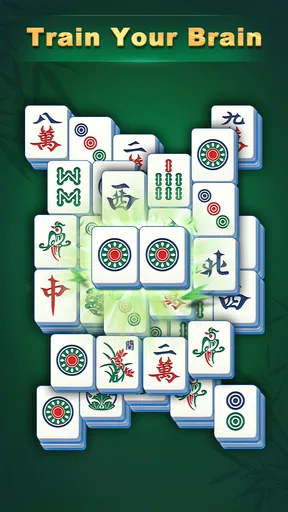
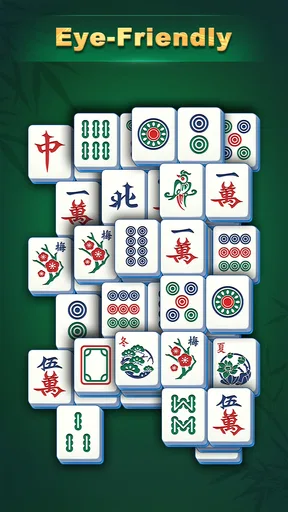
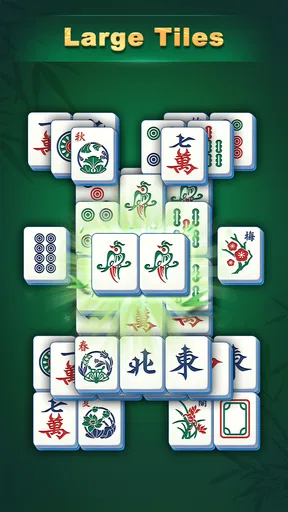
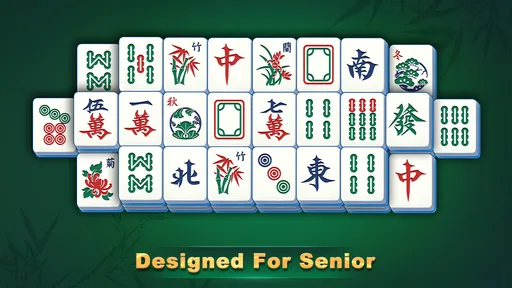
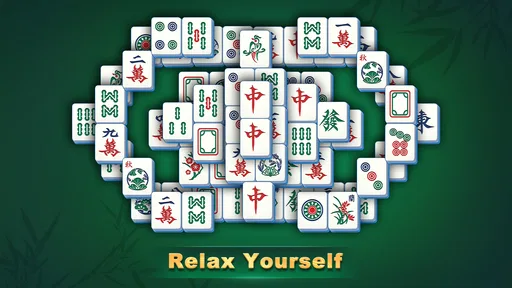
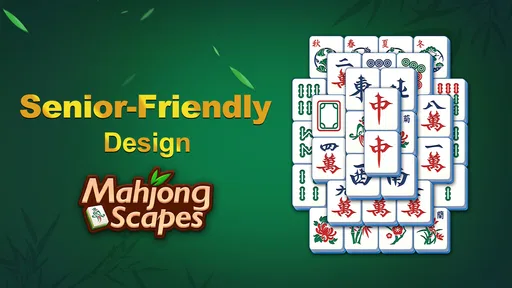
Our Review of Mahjong Scapes®
 Analysis by Appyee
I spent time with Mahjong Scapes® as a quiet, familiar board game rather than treating it like a fast arcade title. Its central idea is easy to understand: clear matching mahjong tiles from layered boards, keep looking for pairs, and try to finish each layout without getting trapped by the remaining choices. That simplicity is exactly why it works well for short breaks, although it also means the experience depends heavily on how much patience you have for repeated puzzle solving.
Developed by PARTYPOP PTE. LTD., this free board game is aimed at a broad audience and carries an Everyone age rating. It runs on Android devices using version 7.0 or later, and the current version is 3.2.6. The game has attracted over five million installs, while its average rating sits at 4.9 from roughly 254 thousand ratings. Those figures suggest that the basic formula has found a large audience, but my experience was more useful than the popularity alone: I found a game that is approachable within seconds, yet still gives careful players a reason to think before every move.
How the first sessions establish a reason to keep playing
The early appeal comes from the almost frictionless start. You do not need to learn a complicated rule set, assemble a group, or wait for another player. The board presents a visual sorting problem, and the first useful habit is to scan the whole layout before touching a tile. Matching the first obvious pair feels satisfying, but the more important lesson is that every removal changes what can be seen next.
That makes the opening stages more than a memory exercise. I quickly found myself checking which tiles were blocked, which ones were exposed, and whether removing a pair would reveal something useful underneath. A careless match can leave the board with fewer practical options, while a patient choice can open a new section. The real early goal is not simply to match quickly; it is to preserve future choices.
This is where the game can suit someone who wants a gentle mental warm-up. I can imagine playing it while waiting for an appointment or during a short evening pause, when a full strategy game would feel like too much commitment. The rules are familiar enough that the first session does not feel like studying a tutorial. At the same time, the layered arrangement gives the familiar mahjong format a little more thought than simply finding identical pictures in an open grid.
Players who expect a traditional competitive mahjong experience should adjust their expectations. This is a solo matching puzzle, not a table game against opponents and not a tile game built around betting, conversation, or long-term hand construction. That distinction matters because the satisfaction comes from clearing a board and managing a sequence of decisions, not from reading another player or building a winning hand.
Small progress signals make simple boards feel purposeful
One of the better aspects of the design is the way a completed layout acts as its own reward. Finishing a board gives me a clear stopping point, which is useful when I only have a few minutes. I do not need to remember a complicated campaign state to feel that I accomplished something. The board was full, I made the right sequence of matches, and now it is clear.
That structure also creates a natural “one more board” effect. A puzzle that begins as a quick distraction can become a longer session because the next layout is close enough to feel manageable. This is a healthier kind of momentum than a game that constantly demands attention through timers or multiplayer pressure. I can put the phone down after a completed puzzle without feeling that I have abandoned a team or missed a live event.
Still, the strength of that progress signal depends on whether you enjoy repetition. The basic action remains matching tiles, so players looking for character development, a large narrative, or a broad collection of radically different activities will find the progression modest. The game’s satisfaction comes from improving your decisions and clearing more boards, not from a deep role-playing system.
A useful way to play is to treat each board as a short planning exercise. Instead of immediately taking the first visible pair, I look for matches that are covering other tiles or sitting in a position that could restrict the next few moves. This approach makes the progress feel earned. It also gives the game more staying power than its simple controls might suggest, because I am gradually improving my reading of the layout rather than merely tapping faster.
The difficulty curve rewards attention more than speed
The most interesting challenge comes from the order in which tiles are removed. A board can look generous at first, but the available pairs may be arranged so that one poor decision blocks useful information. I found that speed is not the best measure of success. A slower scan often prevents the kind of mistake that forces a restart or consumes a helpful option.
This gives the game a calm difficulty curve. It does not need complicated controls to make later decisions more demanding. The challenge grows naturally from the relationship between visible tiles and hidden or obstructed ones. When several possible matches are available, the question becomes which pair creates the most room, not which pair can be tapped first.
That design is particularly well suited to players who like light concentration. It can help fill a quiet gap in the day without requiring the intensity of a timed action game. I would not describe it as a demanding strategy title, but it is more thoughtful than a purely automatic matching game. The difference is small in each move and noticeable across a whole board.
There is also a practical trade-off for people with visual fatigue. Mahjong tiles contain repeated symbols and similar shapes, so extended sessions may become tiring even when the rules remain easy. I recommend playing in short blocks and taking a break when the tile faces begin to blur together. This is not a game I would choose for a long commute if I already had a headache or needed very large, high-contrast visuals.
Another point worth considering is the role of mistakes. If you tend to restart the moment a board becomes inconvenient, the game may feel more frustrating than relaxing. I had better results when I treated an imperfect position as a puzzle to recover from. Looking again at the remaining exposed tiles can reveal a route that was not obvious at the beginning. That recovery mindset adds a useful layer of patience and stops every imperfect move from feeling like failure.
What keeps the loop going, and where it may become pressure
The retention loop is straightforward: start a board, make matches, clear the layout, and move on to another challenge. That clarity is a benefit because the game does not bury its main activity under menus. It is also the reason some players may eventually feel that the experience is too narrow. If the basic act of matching tiles does not remain enjoyable, there is not a second genre waiting to rescue the session.
The free entry point makes trying it easy, but in-app purchases range from $0.99 to $99.99 per item. I would approach those purchases carefully. A free puzzle game can be perfectly enjoyable without spending, but the presence of a wide purchase range means it is worth checking the purchase prompts before tapping through them, especially if a child is using the device. The Everyone rating describes the intended age suitability, not a promise that every player will prefer the game’s optional spending structure.
For me, the best way to avoid purchase pressure is to decide in advance that I am using the game for its board-clearing loop, not for buying a faster route through it. That mindset keeps the focus on observation and planning. If you dislike any game that presents optional purchases during a casual session, this may not be your ideal choice, even though the download itself is free.
The game is also less suitable for players who need a strong social reason to return. There is no substitute here for playing a board game with friends, competing in a live match, or discussing a move with another person. I would choose a multiplayer mahjong app for social interaction and a more traditional mahjong title for rule-heavy play. I would choose this one when I want a self-contained puzzle that can begin and end on my schedule.
A realistic everyday use case
Imagine having twelve minutes before leaving for work. You do not want to start a story-driven game because you may need to stop halfway through a scene, and you do not want a competitive match because an interruption could affect someone else. This is where the format fits nicely. I can open the game, work through a board at my own pace, and stop after a clear result rather than abandoning a larger mission.
The same applies to an evening routine. After a busy day, matching tiles offers enough concentration to pull attention away from a crowded mind without demanding fast reactions. I found it most pleasant when I played with a specific limit in mind: one board, or a short session, then put the phone away. Without that boundary, the repeated completion loop can quietly stretch longer than intended.
For an older relative who enjoys puzzles, the familiar tile theme may also feel more welcoming than a complex mobile game. However, I would first check whether the symbols are comfortable to read on that person’s device and whether they are comfortable with optional purchases. The simple rules are accessible, but visual clarity and spending controls matter just as much as the game’s age rating.
How it compares with other board-game choices
Compared with solitaire, this game gives me more visual depth and a stronger sense of uncovering a board. Solitaire is often about arranging cards into known sequences, while this matching format asks me to notice relationships between exposed tiles and think about what each removal reveals. Someone who enjoys organizing cards may like both, but the moment-to-moment decisions feel different.
Compared with Sudoku, the challenge is less numerical and less dependent on filling a complete logical grid. Sudoku rewards deduction through fixed constraints, whereas this game combines recognition with board management. I can play it when I want a lighter puzzle than Sudoku, though I would not use it as a replacement when I am specifically looking for deep, mistake-sensitive logic.
Compared with competitive mahjong, this is much easier to enter and far less socially demanding. There is no need to learn a large collection of scoring rules before making a meaningful move. The trade-off is that experienced mahjong players may miss the tactical richness of building hands and responding to opponents. The right choice depends on whether “mahjong” means the traditional game to you or simply the pleasure of matching its distinctive tiles.
Compared with match-three games, the pace is calmer and the board usually asks for more deliberate scanning than rapid chain reactions. Match-three titles are often better when I want bright effects and quick feedback. Mahjong Scapes® is better when I want a quieter activity in which the main reward comes from seeing a plan work.
Who will enjoy it, and who should skip it
I would recommend it to casual puzzle players, fans of tile matching, people who enjoy short solo sessions, and anyone who likes a familiar rule set with a little positional planning. It is especially suitable for players who prefer games that can be paused mentally as well as physically. You can focus intensely for a few minutes or play more casually while taking a break.
I would be more cautious recommending it to someone who needs constant novelty. The core loop is intentionally focused, and that focus is both its identity and its limitation. Players seeking a story, competitive rankings, rich customization, or a large variety of board-game rules should look elsewhere. Likewise, anyone who finds repeated visual matching tiring may prefer a word game or an audio-friendly puzzle.
The game also asks for a certain kind of patience. If you tap impulsively, you may create avoidable problems. If you enjoy scanning, predicting, and correcting your plan, the same boards become more rewarding. That difference is important: the game is not universally relaxing, because its calm surface can still punish inattentive play.
My verdict on the progression and pacing
After playing through its matching-focused loop, I think the progression works best as a series of small personal goals rather than a dramatic journey. The immediate objective is clear, the completion of each board provides a satisfying progress signal, and the growing need to choose matches carefully adds challenge without turning the game into a stressful contest.
Its pacing is strongest when used in short sessions. The board-based structure gives me clean stopping points, while the next puzzle remains tempting enough to support another round. That balance makes it a good companion for waiting rooms, quiet breaks, and relaxed evenings. It is not the right fit if I want a deep campaign or a social board-game night, but it does not pretend to be those things.
My main recommendation is to play thoughtfully rather than quickly. Scan before matching, prioritize moves that expose useful tiles, and avoid treating every board as a race. That simple approach brings out the most interesting part of the design and helps the game feel less repetitive.
With its free price, Everyone rating, broad device compatibility from Android 7.0 onward, and a current version of 3.2.6, it is easy to try. Just keep the optional purchase range in mind and decide whether a focused solo matching loop is what you want. For me, Mahjong Scapes® succeeds as a gentle but occasionally demanding board puzzle: not a replacement for traditional mahjong or a full strategy game, but a convenient way to give my attention a small, satisfying task.
Privacy and Permissions
See what permissions an app requests and how it handles your data.
- Wi-Fi connection information
- view Wi-Fi connections
- Other
- view network connections, full network access, Google Play license check, read Google service configuration
Verdict
Strengths of Mahjong Scapes®
- Relaxing tile-matching gameplay suitable for short sessions.
- Beautiful scenery gives each level a calm, visual appeal.
- Simple controls make it accessible for new Mahjong players.
- Level progression provides a clear sense of ongoing achievement.
- Offline play is useful when traveling or away from Wi‑Fi.
Limitations of Mahjong Scapes®
- Some levels may feel repetitive after extended play.
- Later puzzles can become challenging without careful planning.
- Hints or boosters may be limited unless earned or purchased.
- Frequent ads can interrupt the flow in the free version.
- The game may require considerable storage for extra content.
Similar Picks in This Category
View All
Ludo King®
Gametion4.1

Ludo
Yarsa Games4.6

Tile Master® - Matching Game
Higgs Studio3.6

Checkers Online
CC Games4.6

Dominoes
Loop Games4.7

Chess
Chess Prince4.6
Frequently Asked Questions
What is Mahjong Scapes® and how is the game played?
Mahjong Scapes® is a relaxing tile-matching puzzle game built around traditional mahjong-inspired layouts. The main objective is to find and match identical, available tiles until the board is cleared. As you progress, layouts can become more complex, requiring careful planning rather than simply tapping the first pair you see. It combines casual gameplay with scenic visuals and a calm atmosphere suitable for short or extended sessions.
Is Mahjong Scapes® free to download and play?
Mahjong Scapes® can generally be downloaded and played without an upfront purchase, although the exact availability of free content may depend on the platform and version installed. Like many free mobile puzzle games, it may include optional in-app purchases, advertisements, or paid items that provide bonuses or other conveniences. Before downloading, check the store listing for current pricing, subscriptions, and purchase details.
Does Mahjong Scapes® require an internet connection?
The basic tile-matching gameplay in Mahjong Scapes® may be available during offline sessions, which is useful when traveling or when you have limited connectivity. However, certain features may still require an internet connection, including advertisements, cloud synchronization, updates, events, purchases, or account-related services. Availability can vary by device and version, so it is best to test the game after installation rather than assuming every feature works offline.
Are there hints, shuffles, or other assistance options in Mahjong Scapes®?
Mahjong Scapes® is designed to be approachable, and puzzle assistance may be available when a board becomes difficult. Depending on the current version, players may find tools such as hints, tile shuffles, undo options, or other boosters. These features can help prevent an unwinnable situation, but they may be limited, earned through gameplay, or connected to optional purchases. Using them strategically is often more rewarding than relying on them immediately.
Is Mahjong Scapes® suitable for children and all mobile devices?
Mahjong Scapes® is generally easy to understand because its core mechanic involves identifying matching tiles, making it suitable for casual players and many families. Nevertheless, parents should review the age rating, advertising practices, and in-app purchase settings before allowing children to play. Device compatibility, storage requirements, graphics performance, and operating-system support can also change, so verify the latest Android or iOS store requirements for your specific phone or tablet.
Play our best games!


